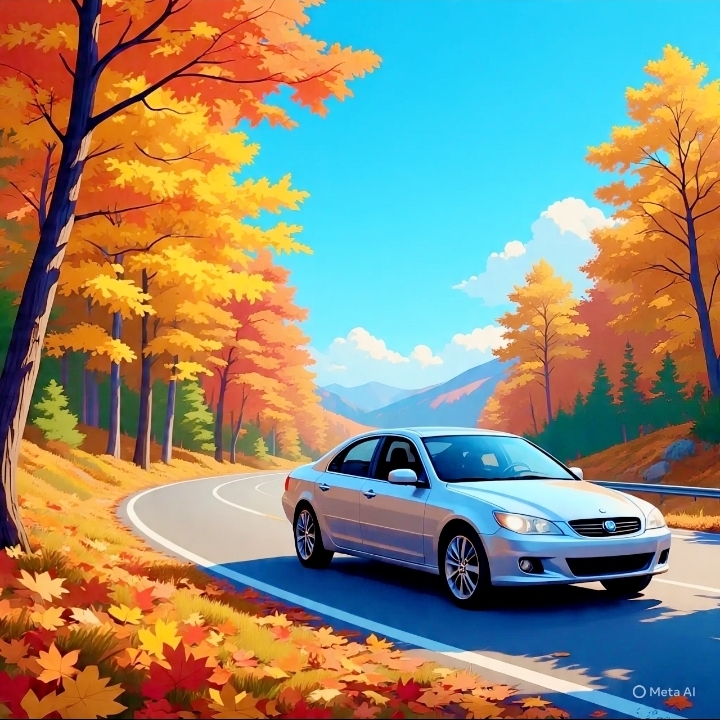
It’s a beautiful Saturday morning. The sun spills across the earth in golden rays, and autumn leaves glow like fire-tipped candles dancing in the breeze. The crisp air clears my thoughts, and I feel my body, mind, and soul awaken in harmony. Driving slowly, I gather the beauty around me as inspiration. Then, as if touched by the wind, my mind drifts back to the stages of life—each one like a season, each one with its own light.
Childhood – The Spring ? Childhood is the spring of life—fresh, green, and bursting with promise. Days feel endless, stretching like wide meadows filled with laughter and play. We chase butterflies, build castles out of sand, and dream under the sky, believing the world is nothing but magic. Just as spring awakens the earth, childhood awakens the heart with wonder and curiosity.
Young Adulthood – The Summer 😕 Young adulthood is summer—bright, bold, and alive with energy. The world feels wide open, like a sunlit horizon waiting to be explored. We dream fiercely, chase love, build homes, and carve paths with passion. Days run short because they are overflowing—with work, ambition, adventure, and joy. Just as summer asks the earth to grow strong and flourish, young adulthood asks us to be brave, to step into our power, and to shine.
Middle Age – The Autumn ? Middle age arrives like autumn, full of richness, yet touched with change. Our lives carry many colors—family, responsibilities, achievements, and lessons learned. We balance caring for children with guiding our parents, juggling dreams with duties. Time moves faster, like leaves falling in the breeze, reminding us that nothing stays forever. Yet autumn is not only about endings—it is about abundance. The lines on our faces are not losses but harvests, proof of all the love we’ve sown and the wisdom we’ve gathered. Autumn teaches balance and reflection.
Old Age – The Winter ?? Old age is winter—quiet, gentle, and filled with deep peace. The world slows down, and the noise fades. Houses grow quieter, yet hearts grow fuller, holding memories like treasures. We sit by windows or on porches, watching seasons turn, knowing we’ve walked through them all. Just as winter holds the earth in stillness, old age teaches us gratitude—thankfulness for love shared, for battles fought, for moments lived. Wrinkles become the poetry of time, and silence becomes a friend.
Childhood (Spring) gives us wonder. – Young adulthood (Summer) teaches courage. – Middle age (Autumn) shows balance. – Old age (Winter) reminds us to be grateful.
The beauty of life is that each season prepares us for the next.
And now, as I drive on this golden Saturday morning, surrounded by autumn’s glowing beauty, I realize how perfectly the seasons of nature mirror the seasons of life. The trees remind me that change is not loss—it is transformation. The golden leaves remind me that even endings can shine. And the sunlight pouring over the road reminds me that no matter the stage, life always offers light.
So wherever you are—whether in the bloom of spring, the fire of summer, the harvest of autumn, or the stillness of winter—walk gently. Carry an open heart. Leave behind love, kindness, and memories that will outlast the turning of every season.
Because just like this golden autumn day, every stage of life is a gift.
#ChoitalykRuman ##ummeymiah
2025 ChoitalykRuman (Ummey R Miah). All rights reserved.
This morning, I stopped at a little café for my usual coffee. The place was crowded—people scrolling on their phones, shuffling impatiently, and waiting for their orders with that familiar morning rush energy.
In front of me stood an elderly man. His coat looked a little worn, his hands trembled as he reached into his pocket, and he carefully laid a few coins on the counter. After counting them twice, he looked at the cashier and said softly, almost apologetically, “I think I’ll just take the toast… I don’t have enough for the coffee.”
I noticed how his shoulders sank, as though giving up that simple pleasure—a warm cup of coffee—was more than just skipping a drink. It felt like giving up a little joy in his morning.
Something inside me couldn’t let it pass. Before the cashier could respond, I leaned forward and said, “Please keep the coffee. I’ll cover it.”
The man looked at me, startled. His eyes widened, and for a moment, he seemed unsure how to respond. “Oh, no… I couldn’t let you,” he whispered.
But I smiled and handed my card over. “It’s only coffee,” I said gently. “But everyone deserves to start their day with one.”
There was a pause. The café, which had felt so noisy just moments before, suddenly seemed to quiet down. The elderly man’s eyes glistened, and he held the cup with both hands as if it were something precious.
“Thank you,” he said softly, his voice breaking a little. “Not just for the coffee… but for reminding me I still matter.”
That sentence stayed with me long after I walked out with my own coffee.
We live in a world where people are constantly rushing—checking their phones, worrying about their schedules, and often overlooking the little moments that connect us. Yet, in that café, one small act of kindness shifted the entire atmosphere. Strangers who had been impatient just a minute earlier looked calmer, softer, more human.
It reminded me that kindness isn’t about how much you give; it’s about what your gesture represents. That coffee didn’t just warm his hands—it warmed his spirit. It reminded him that he is seen, valued, and worthy of kindness.
And maybe that’s the most important thing we can give one another: the reminder that we still matter.
So today, I carry this thought with me: never underestimate the power of a small act. A smile, a helping hand, or even the price of a cup of coffee can restore dignity, hope, and light in someone’s day.
Because one day, it may be us standing there, hoping for the same.
This blog and its contents, including text, images, and other media, are the intellectual property of [Your ChoitalykRuman/Ummey Miah] unless otherwise stated. No part of this publication may be reproduced, distributed, or transmitted in any form or by any means, including copying, recording, or other electronic or mechanical methods, without prior written permission from the author, except in the case of brief quotations with proper credit.
We live in a time where speed is celebrated, where convenience often replaces connection, and where self-preservation can sometimes take priority over compassion. The world is loud, busy, and, at times, unkind. And yet — there is still a quiet power in choosing to care.
Be the one who chooses love over indifference. Be the one who shows up, even when it’s inconvenient. Be the one who makes the effort to check in, to ask the questions that matter, and to truly listen to the answers.
There is something rare and extraordinary about a person who loves without hesitation — who allows themselves to feel without apologizing for the depth of their heart. In a world that teaches us to “play it cool” and hide our vulnerabilities, being open and real is an act of courage.
The Strength in Softness
It’s easy to mistake softness for weakness, but in truth, it is one of the strongest qualities a human being can possess. Remaining kind in the face of cruelty, keeping your heart open when life has tried to close it — that takes grit.
Believe in the gentleness that still exists, even if it feels hidden. Believe in the goodness of people, even when the news paints a darker picture. Believe in the beauty of being untethered, of moving through life with trust instead of fear.
Softness is not about being naive. It’s about being grounded in hope. It’s about refusing to let bitterness take root in your soul.
Choosing to Show Up
Showing up doesn’t always mean grand gestures. Sometimes it’s the simple things — answering the phone when a friend calls late at night, offering a smile to a stranger, sending a thoughtful message without expecting anything in return.
When you make someone feel seen, you give them a gift that stays with them far longer than you realize. When you show up, you remind others that they matter — and sometimes, that reminder can change the course of someone’s day… or even their life.
A World in Need of More Gentle-Hearted Souls
The truth is, the world doesn’t need more carelessness. It doesn’t need more disregard, more people hardened by cynicism. What it needs are those who choose to remain tender, who keep their compassion alive even after being hurt.
I will not trade the garden blooming in my heart for the weight of cold stones. The world may be harsh, yes, but that hardness only means it is in desperate need of those who dare to keep their hearts in full bloom — people willing to plant kindness in barren places, again and again.
In the end, caring is not a weakness. It is a quiet rebellion against the apathy that threatens to spread. So, be the one who loves. Be the one who listens. Be the one who shows up.
Because when we choose to keep our hearts blooming, even in the roughest of seasons, we become the very thing the world needs most.
There was a moment recently when I found myself obsessing over a small mistake in a presentation I had created. Just a missing comma—nothing that would change the meaning. Still, a part of me wanted to go back, fix it, perfect it. But then I paused and asked myself, Is it really necessary?
That small moment led to a deeper realization. We spend so much of our lives trying to improve things—our work, our appearance, our habits, even our thoughts. While there’s nothing wrong with growth, sometimes the constant drive to “fix” things distracts us from simply being present with what is.
Think about it: How many times have you looked in the mirror and zoomed in on a flaw rather than seeing your whole, radiant self? How often have you replayed a conversation in your mind, wondering if you should have said something different—when in reality, it was just a natural human interaction?
We’re conditioned to strive. To upgrade. To polish every rough edge.
But what if the real growth is not in fixing—but in allowing? What if wisdom lies not in making ourselves perfect, but in loving ourselves through the imperfections?
Self-Improvement vs. Self-Love
There’s a subtle but profound difference between self-improvement and self-love.
Self-improvement often comes from a place that says: “You’re not enough yet—do more, be more.”
Self-love speaks with a different tone: “You’re enough as you are. Grow if you feel inspired, but not because you think you’re broken.”
Real-Life Moments That Teach Us
? At Work Let’s say you’re part of a team project. You spot a small flaw in someone else’s work—something you could point out. But will it improve the outcome meaningfully? Or is it just your inner perfectionist reaching for control? Sometimes, grace means letting it go. Saving your energy for what truly matters.
? At Home You forgot to cook something you promised. You feel bad. Instead of spiraling into guilt or self-blame, you take a breath and say, “It’s okay. I forgot. I’m still a loving human being.” Then you make tea and laugh about it. That’s self-love in motion.
? In Parenting or Relationships You may catch yourself trying to “fix” your loved ones—improving their mindset, correcting their tone, guiding their path. But sometimes, the deepest form of love is acceptance. Letting them be on their own journey, while offering quiet support.
Letting Things Be Doesn’t Mean Giving Up
This doesn’t mean we stop growing. It means we grow from a different place—from peace, not pressure. We begin to trust that life itself is always guiding us. That every challenge, every trigger, every mistake is already a built-in opportunity to evolve.
Instead of chasing self-improvement like a full-time job, we soften into self-awareness. We observe, we reflect, and we choose what feels authentic. Some things we may still want to change—but not because we feel unworthy, rather because we love ourselves enough to grow gently.
The Flow of Spirit-Mind Living
There’s a different kind of awareness available to us when we live from our spirit mind—that quiet, knowing part of us that sees beauty even in the cracks. When we shift from the noise of constant self-fixing to the calm of self-trust, we begin to live more freely, more joyfully.
Life becomes less about performing and more about being. Less about proving and more about loving.
So next time you catch yourself trying to improve something—whether it’s a detail, a moment, or yourself—pause and ask: Is this coming from love or fear? Can I let this be, just for now?
Because sometimes, the most powerful form of growth is allowing yourself to be imperfect, present, and deeply loved—as you are.
Have you ever stood at a crossroads in life and felt like the door you desperately wanted to walk through just wouldn’t budge? Or perhaps you were surprised when a door swung open effortlessly, leading you into a chapter you never imagined? Both moments—the open doors and the closed ones—are not random. They are part of a divine plan written with wisdom far beyond our understanding.
When God opens a door, it’s because He has prepared the path for you. He’s aligning people, opportunities, and timing in a way that you may not see yet, but will one day look back on with awe. Embrace it. Step forward with courage. That open door is an invitation to grow, to stretch, to trust. And when a door closes? That, too, is a gift. Yes, it may feel like a setback, a loss, or even a rejection. But often, what feels like a “no” from God is really a redirection toward something far greater. Think of the person who didn’t get the job they prayed for, only to be offered one later that fulfilled their soul’s calling. Or the relationship that ended, making room for healing and self-discovery, and eventually, a love that honored their worth.
Life will always bring change—it’s the only constant. Seasons shift. People evolve. Circumstances rise and fall. But in every twist and turn, you have a choice: to react in fear or to respond in faith. Don’t question God’s plan just because it doesn’t look like your plan. Don’t assume the story is over just because the page turned unexpectedly. The author of life sees the whole book. Let Him write your story. Let Him order your steps.
Be still in moments of confusion. Be patient in seasons of waiting. And be joyful even in uncertainty—because you are not alone. You are being guided, shaped, and prepared for something beautiful. Whatever you’re facing today, hold on to this truth: God is good, always. And everything that is happening—whether it feels pleasant or painful—is working together for your highest good.
Trust the process. Keep your faith strong. Walk in gratitude. Your breakthrough might just be one more closed door away. Stay blessed, stay hopeful, and keep going. #ChoitalykRuman
Be still. Be faithful. Be blessed. God is always good.
When life deals us profound trauma, it’s common to hear advice like, “You need to forgive to move on.” But let’s be honest—how can you even think about forgiveness when the pain still feels raw and overwhelming? It’s not that forgiveness doesn’t have value, but when you’ve been deeply hurt, it shouldn’t be the first step. Healing must come first.
Forgiveness is often seen as the ultimate goal, but expecting it too soon can feel like putting a bandage on a wound that hasn’t been cleaned. Healing after trauma isn’t about rushing to forgive; it’s about tending to your pain, understanding what you’ve been through, and creating a life that feels safe, loving, and whole again.
Sarah’s Story
Let me share a story to show how this works in real life.
Sarah was a vibrant, outgoing woman who loved deeply and trusted fully. But one day, her world came crashing down when her closest friend, Emily, betrayed her trust in the most painful way. Emily had spread deeply personal information about Sarah to others, leading to humiliation and shattered relationships. Sarah felt blindsided, hurt, and hollow.
At first, everyone told Sarah she needed to forgive Emily and move on. “It’s the right thing to do,” they said. But Sarah wasn’t ready. Every time she thought about forgiveness, it felt like she was being asked to pretend the pain didn’t exist. So instead, she chose a different path: healing.
Sarah began focusing on herself. She joined a local yoga group where she found a sense of peace and community. She started journaling, pouring her thoughts and emotions onto the page. And slowly, she began reconnecting with new people who valued her for who she was.
One day, while walking in the park, Sarah noticed something remarkable. The bitterness and anger she’d been carrying toward Emily weren’t as heavy anymore. In its place was a sense of calm. It wasn’t that Sarah excused what Emily had done, but she no longer felt trapped by the betrayal. Forgiveness, she realized, had found her—not because she forced it but because her heart had begun to heal.
Why Healing Matters First
Like Sarah, when someone deeply hurts us, it can shake our sense of self, safety, and trust. Healing isn’t just about moving past the event—it’s about tending to the emotional wounds it leaves behind. These scars can impact how we see ourselves and the world. Healing is about gently working through those scars and reclaiming your inner strength.
For example, if your trauma left you feeling unloved or unworthy, healing might look like finding people or experiences that remind you of your value. If it left you feeling unsafe, healing might involve building a life where you feel protected and secure.
This process is essential because it’s hard to forgive when you’re still in survival mode. It’s hard to release anger or resentment when you haven’t yet rebuilt the parts of yourself that were hurt. Healing is the foundation upon which forgiveness can stand.
The Power of Opposites
One of the most effective ways to heal is to seek out the opposite of the harm you experienced. If someone’s actions made you feel isolated, surround yourself with love and connection. If their words made you feel small or powerless, take steps to regain your confidence and autonomy.
This doesn’t erase the pain, but it creates balance. It teaches your mind and heart that while the world can be harsh, it can also be kind. You’re reminding yourself that you’re not defined by what happened to you.
When Forgiveness Comes Naturally
As you heal, something remarkable begins to happen. The pain that once felt overwhelming starts to fade. The anger that consumed you might feel less sharp. The resentment might not hold as much weight.
And forgiveness? It often arises naturally—not as an act of will but as a byproduct of your inner peace. When the chaos within you settles, forgiveness can feel less like a task and more like a gift you give to yourself.
Give Yourself Time
Healing isn’t a straight path—it’s more like a winding road with moments of progress and setbacks. And that’s okay. Each step you take toward love, safety, and resolve is a victory.
Remember, forgiveness isn’t a requirement for healing; it’s often a gift that healing brings. So focus on what you need right now—peace, strength, and hope. Like Sarah, you’ll find that the rest will come in its own time.
Your journey is your own, and you have the strength to walk it.
Here are 5 ways to overcome challenges in your life and stay happy
Life is filled with ups and downs, and we all encounter difficult times. While challenges can feel overwhelming, there are ways to tackle them and come out stronger. Here are five practical steps you can take to navigate life’s difficulties with resilience and purpose.
1. Embrace the Reality Start by acknowledging the situation you’re facing. Trying to ignore or deny it only prolongs the struggle. Acceptance is key; it allows you to keep a clear, calm mind and think more effectively about your next steps. Take a moment to recognize the challenge without judgment—it’s simply part of life’s journey.
2. Shift to Solutions Focusing on the problem can trap you in a cycle of negativity, so direct your energy toward finding solutions. Brainstorm different ways to tackle the issue, and don’t be discouraged if the first attempt doesn’t work. Adjust your approach and try again, knowing that each step brings you closer to a resolution.
3. Reach Out for Support Remember, you don’t have to face difficulties alone. Seek out trusted friends, family members, or even a therapist. Talking things through can relieve some of the burden and help you see new perspectives. Sometimes, simply sharing your concerns can ease the weight you’re carrying.
4. Prioritize Self-Care Self-care is not selfish; it’s essential. Make time for activities that refresh you, whether that’s exercise, meditation, or spending time in nature. These moments recharge your energy and bring clarity, making it easier to tackle challenges from a place of balance and inner strength.
5. Take Lessons from the Journey Difficulties often teach us valuable lessons. Reflect on what the experience has shown you about yourself, others, or life in general. Use these insights to build resilience and prepare for future challenges, knowing that each difficulty is helping you grow.
Conclusion Facing life’s challenges isn’t easy, but it’s possible to handle them with grace and courage. By accepting the situation, focusing on solutions, seeking support, practicing self-care, and learning from your experiences, you’re not only overcoming obstacles but also building the strength to handle whatever comes next. Remember, every challenge is an opportunity for growth, and with each step forward, you’re creating a more resilient, empowered version of yourself.
Life has a way of testing us, often in unexpected and challenging ways. It’s like a storm that catches you off guard—one moment, you’re enjoying a gentle breeze, and the next, you’re battling fierce winds that seem determined to knock you down. Just when it feels like everything is falling into place, when you finally catch a glimpse of peace and think, “This is it, I’ve found my balance,” life shakes things up again, reminding you that nothing stays the same for long.
We’ve all experienced it—the frustration of taking a step forward only to be pushed two steps back. Life isn’t just about smooth paths and gentle winds; it’s also about rough roads, difficult moments, and harsh lessons that test us to our core. These times can leave us feeling lost, questioning our purpose, and wondering where we truly belong.
But in the midst of these challenges, I’ve found comfort in a simple truth: change is inevitable. No matter how hard or painful the moment, it will pass. This reminder has become a quiet mantra for me, a grounding thought that keeps me going through life’s uncertainties. It’s a message that when things are tough, they won’t stay that way forever, and that we have the power to adapt, rebuild, and rise stronger.
This truth applies equally to the good times. When life feels calm and joyful, I’ve learned not to take it for granted. Instead, I remind myself to savor these moments, to embrace them fully, knowing that they, too, are part of life’s ebb and flow. It’s not about living in fear of what’s to come, but about deeply appreciating the present—understanding that life’s beauty is often found in its fleeting, precious moments.
The constancy of change brings a certain kind of beauty. It keeps us humble during the highs and gives us hope during the lows. Much like standing at the edge of an ocean—some days calm, some days wild—the tides remind us that life is always moving, always evolving. And in that movement, we find our own strength to grow, adapt, and transform.
So, whether you’re in a season of joy or struggle, know that this moment is temporary. It’s not your forever. Life is a journey of unfolding chapters, and each page brings something new. If things are going well, celebrate the now, cherish the joy, and live fully in the moment. And if you’re facing a storm, remember that every storm eventually passes, leaving behind the promise of brighter days.
Hold on to hope, even when it feels distant. Whether through prayer, faith, or simply trusting the natural rhythm of life, know that you have the strength to endure. You have the resilience to heal, the capacity to love again, and the courage to keep moving forward.
Change is inevitable, but so is your ability to grow and find joy again. Trust the process, embrace the journey, and keep your heart open to the beauty that’s always waiting around the corner. Life, with all its challenges, also offers constant moments of wonder and grace—you just have to be ready to see them.
Life has a way of testing us, often in unexpected and challenging ways. It’s like a storm that catches you off guard—one moment, you’re enjoying a gentle breeze, and the next, you’re battling fierce winds that seem determined to knock you down. Just when it feels like everything is falling into place, when you finally catch a glimpse of peace and think, “This is it, I’ve found my balance,” life shakes things up again, reminding you that nothing stays the same for long.
We’ve all experienced it—the frustration of taking a step forward only to be pushed two steps back. Life isn’t just about smooth paths and gentle winds; it’s also about rough roads, difficult moments, and harsh lessons that test us to our core. These times can leave us feeling lost, questioning our purpose, and wondering where we truly belong.
But in the midst of these challenges, I’ve found comfort in a simple truth: change is inevitable. No matter how hard or painful the moment, it will pass. This reminder has become a quiet mantra for me, a grounding thought that keeps me going through life’s uncertainties. It’s a message that when things are tough, they won’t stay that way forever, and that we have the power to adapt, rebuild, and rise stronger.
This truth applies equally to the good times. When life feels calm and joyful, I’ve learned not to take it for granted. Instead, I remind myself to savor these moments, to embrace them fully, knowing that they, too, are part of life’s ebb and flow. It’s not about living in fear of what’s to come, but about deeply appreciating the present—understanding that life’s beauty is often found in its fleeting, precious moments.
The constancy of change brings a certain kind of beauty. It keeps us humble during the highs and gives us hope during the lows. Much like standing at the edge of an ocean—some days calm, some days wild—the tides remind us that life is always moving, always evolving. And in that movement, we find our own strength to grow, adapt, and transform.
So, whether you’re in a season of joy or struggle, know that this moment is temporary. It’s not your forever. Life is a journey of unfolding chapters, and each page brings something new. If things are going well, celebrate the now, cherish the joy, and live fully in the moment. And if you’re facing a storm, remember that every storm eventually passes, leaving behind the promise of brighter days.
Hold on to hope, even when it feels distant. Whether through prayer, faith, or simply trusting the natural rhythm of life, know that you have the strength to endure. You have the resilience to heal, the capacity to love again, and the courage to keep moving forward.
Change is inevitable, but so is your ability to grow and find joy again. Trust the process, embrace the journey, and keep your heart open to the beauty that’s always waiting around the corner. Life, with all its challenges, also offers constant moments of wonder and grace—you just have to be ready to see them.
The idea that we are constantly connected to a higher power—whether we call it God, the Universe, or Divine Energy—is one that has resonated with me throughout my spiritual journey. This belief was brought to life in a rather unexpected, but profound, way just the other day. I had been casually scrolling through YouTube when I came across a video about spirit animals based on your birth month. A simple, fun video—nothing too serious, I thought. As I watched, I learned that for March, my birth month, the spirit animal is a dolphin, a creature often associated with intelligence, joy, and emotional depth. For February, the spirit animal is a hawk, symbolic of vision, awareness, and keen perception.
Little did I know that this seemingly random discovery would manifest in my life in a way I couldn’t have anticipated.
The Encounter with the Hawk
The following morning, I woke up feeling refreshed and ready to start my day. After breakfast, I grabbed my car keys, walked to the garage, and prepared to head out. It was an ordinary morning, nothing unusual. I backed my car out of the garage, started down the block, and then had to stop abruptly.
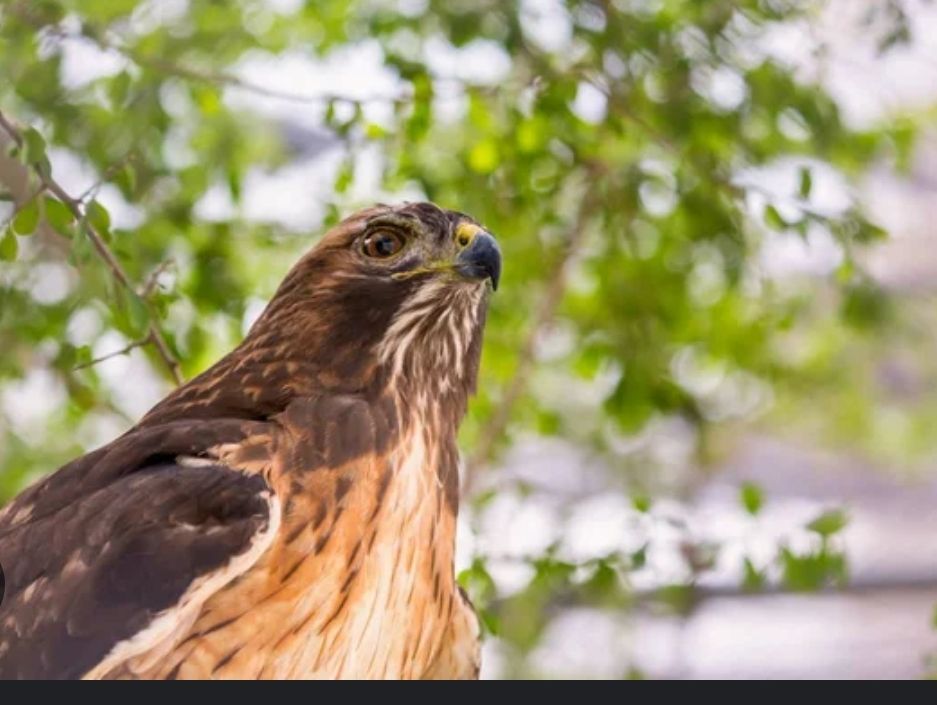
There, in the middle of the road, stood a hawk. But this wasn’t just any bird—it was a magnificent, powerful creature, standing around 22 to 24 inches tall, with striking features and piercing eyes that seemed to look directly into my soul. What was extraordinary about this encounter wasn’t just the bird’s sheer presence, but the feeling of calm that washed over me. This hawk was completely undisturbed by the car, by my presence. It just stood there, almost as if it were waiting for something—or maybe delivering a message.
I sat there for a moment, our eyes locked. Neither of us moved, and I felt a sense of connection that’s hard to describe. There was no fear, no rush to move. It felt as though time had slowed, and in that moment, there was only the hawk and me. As I took in the situation, I began to quietly recite Ayatul Kursi and the 4 Quls, which I often do in moments that feel spiritually significant. I felt the need to confirm to myself the sacredness of the moment, to affirm that this was no accident, and to ensure the atmosphere remained peaceful and protected.
To my surprise, the hawk didn’t flinch. It wasn’t bothered by the recitations, nor did it seem disturbed by my presence. Instead, it seemed to acknowledge my spiritual practice in its own silent way before spreading its majestic wings and soaring into the sky.
In that moment, I felt a deep sense of peace and connection, a knowing that this wasn’t just a random encounter, but a divine moment of communication.
Spiritual Reflection: Signs from God
This experience led me to reflect on how God communicates with us in everyday life. In my experience, God’s messages don’t always come through words or even thoughts. More often than not, they come through actions, events, visions, and the world around us. We are constantly surrounded by signs if we are willing to open our hearts and minds to see them.
For centuries, mystics, spiritual seekers, and ordinary people alike have believed that God speaks to us in ways that transcend language. From the gentle breeze that calms a troubled soul to the unexpected encounter with a stranger offering exactly the words you needed to hear, divine communication is all around us. Sometimes, it’s as subtle as a whisper, and other times, it’s as bold as a hawk stopping you in the middle of the road.
I believe that this hawk was a sign, a divine nudge to remind me of the need to remain aware, to be watchful, and to trust that God’s guidance is always present. Whether through animals, nature, or events, these signs serve as reminders that we are never truly alone in our journey. God is constantly guiding us, even in ways we might not immediately understand.
The Significance of Spirit Animals
The idea of spirit animals is deeply rooted in various spiritual and cultural traditions around the world. Different animals carry symbolic meanings and are believed to offer guidance, wisdom, and protection to those who encounter them. The hawk, as I learned, is a creature of keen vision and awareness. It represents the ability to see things clearly, both physically and metaphorically. Hawks are often seen as messengers, bridging the earthly and spiritual realms.
In Native American culture, the hawk is considered a powerful symbol of awareness and insight. It encourages us to pay attention to the subtle details in life and to trust in our ability to perceive the truth. In ancient Egyptian mythology, the hawk was associated with the god Horus, who symbolized the sky and protection. In both cases, the hawk is seen as a creature that watches over us and helps us navigate life’s complexities with clarity and purpose.
For me, encountering the hawk wasn’t just about seeing a beautiful bird in the wild. It was about recognizing the deeper meaning behind the encounter. This hawk, with its calm demeanor and sharp gaze, was a reminder to stay vigilant, to remain present, and to trust in the guidance that is always available to us.
Personal Connection: The Power of Ayatul Kursi
When I recited Ayatul Kursi and the 4 Quls, I did so instinctively. In moments of awe or uncertainty, turning to these sacred verses brings me a sense of protection and peace. Ayatul Kursi is known as one of the most powerful verses in the Quran, offering protection from harm and spiritual clarity. Reciting it in the presence of the hawk felt like a way to honor the moment, to verify its sacredness, and to affirm my connection to the divine.
What stood out to me was how the hawk remained unaffected by my recitations. It didn’t fly away or seem disturbed. Instead, it stood there calmly, almost as if it were acknowledging the spiritual nature of the moment. This reinforced my belief that God’s signs are not confined to the spiritual realm—they manifest in the physical world around us, and when we open ourselves up to these moments, we can experience a profound sense of connection and understanding.
Divine Communication: Beyond Words
God’s communication with us goes far beyond language. While we often seek answers through prayer or meditation, the divine responds in countless ways—through dreams, feelings, visions, and even the physical world. Have you ever experienced a moment of clarity or a brilliant insight and wondered if it was true—only to look up at the night sky and, at that exact moment, see a shooting star? These moments are not coincidences. They are divine confirmations, affirmations that we are on the right path.
In many spiritual traditions, the concept of divine communication through nature is well-established. Whether it’s the rustling of leaves in the wind, the appearance of a rainbow after a storm, or the sudden calm that descends in a moment of crisis, these are all ways in which the divine reaches out to us. In Sufism, the spiritual practice I follow, there is a deep reverence for nature and the belief that God’s presence is in everything. Every leaf, every breeze, every bird is a reflection of the divine. When we pay attention, we can hear God’s voice in all of creation.
Personal Growth Through Spiritual Awareness
These signs and moments of divine communication are not just beautiful or awe-inspiring—they are opportunities for personal growth. They remind us to slow down, to be present, and to listen to the subtle guidance that is always available to us. In my encounter with the hawk, I was reminded of the importance of awareness. Life can be chaotic, and it’s easy to get caught up in the noise of everyday existence. But when we take the time to pause, to reflect, and to pay attention to the world around us, we can experience a deeper connection to the divine and to ourselves.
This encounter also reinforced the importance of trust. Trust in the signs, trust in the journey, and trust in God’s plan. It’s easy to question whether these moments are real or just coincidences, but I’ve learned that when something resonates deeply with your soul, it’s worth paying attention to.
Conclusion: Trusting in the Signs
As I reflect on my encounter with the hawk, I am filled with gratitude for the reminder that we are constantly in communication with the divine, even when we don’t realize it. Whether through a hawk’s gaze, a sudden insight, or the peaceful feeling that washes over us during prayer, God’s guidance is always present.