One late afternoon, a few colleagues were chatting in the office cafeteria. The topic somehow drifted to a simple but profound question “Other than our jobs, who are we, really?”
Someone laughed and said, “I’m an engineer.” Another added, “I’m a manager.” Someone else proudly said, “A developer.”
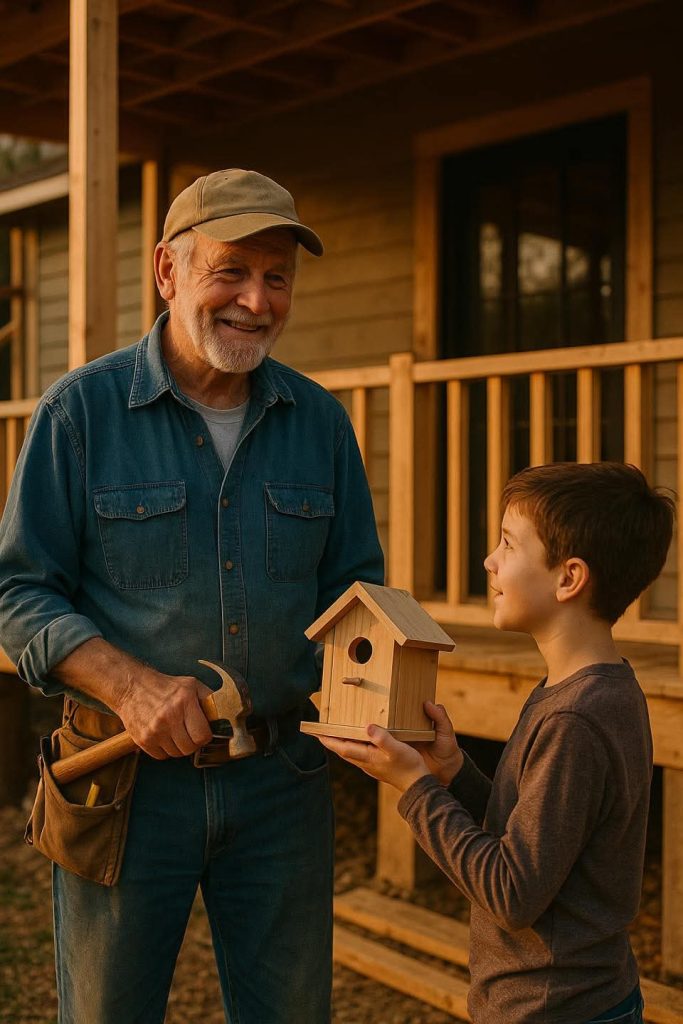
But in one quiet corner sat a man in a plain shirt, smiling gently, saying nothing.
A young colleague looked at him and asked, “Sir, you didn’t say anything. What’s your profession?”
The man set down his teacup, paused a moment, and softly replied, “I’m a builder, I build the future of people.”
The young man frowned playfully. “Oh, do you work in construction?”
The man smiled and shook his head. “No, I work for an organization called Home. My ongoing project is my child. Every day I lay bricks in his dreams, paint colors in his character, and teach him how to stand tall, even when life breaks him down.”
The sounds of the cafeteria slowly faded. Everyone went silent.
The young man’s eyes softened — he suddenly saw his own father, the man who always said, ‘I’m fine,’ even when exhaustion and sacrifice lined his face. The man who quietly folded away his own dreams so his children’s could take flight.
The father finished his tea and stood up. “My title at work may be small,” he said with a gentle smile, “but my life’s title. ” Father “ that’s the greatest honor I’ve ever held.”
No one spoke. Only silence filled the room a silence that carried a truth too deep for words:
Being a father is the world’s quietest yet most noble profession.
I once thought that if I wished hard enough, life would somehow change on its own. I used to close my eyes, whisper my hopes to the stars, and wait for something magical to happen. But as time passed, I realized that wishes alone don’t move mountains, decisions and actions do.
A wish is like a candle; it glows beautifully for a moment, but it takes commitment and courage to turn that flicker of light into a flame that truly brightens your path.
There was a period in my life when I kept waiting ; waiting for the “right moment,” the “perfect time,” or for something to magically fall into place. I kept saying, “Maybe tomorrow.” But one day, I asked myself ,What if tomorrow never comes?
That question changed everything.
That’s when I learned to connect life with my days, not just count my days and call it life. Each sunrise became a reminder that I have another chance to do something meaningful to love, to forgive, to grow, to simply be.
And as I started to live with more awareness, I also began to understand the true value of people those who walk beside you quietly, those who listen when you need to talk, those who show up when you least expect but most need it.
I used to think love was about big gestures grand words, fancy gifts, and perfect moments. But now, I’d rather have one rose, or even a wildflower from the side of the road, handed to me with genuine care. I’d rather have a friend say, “I’m proud of you,” or “I’m here,” while I’m still here to smile back and say thank you.
Because love, appreciation, and kindness mean the most when they are given while we are alive to feel them.
So now, I cherish every person who gives me their time, their love, their care, and their attention. Life has taught me that the most valuable gifts aren’t wrapped they’re felt.
If I could give one piece of advice from my own journey, it would be this: Don’t just wish for change decide, and then take one small step every day toward it. Don’t wait for a special day to say kind words today is already special.
Every sunrise is a new beginning, and every kind heart that crosses your path is a blessing.
To everyone who has shared even a small part of my journey thank you. You’ve been a light in my story, and I appreciate you more than words can say.
With love and gratitude, Just saying… life is short live it with heart.
There are days when everything feels heavy , like the air itself is thicker, and even simple things take more effort. You wake up, make your coffee, and wonder how to hold it all together. Yet, sometimes, in the middle of that quiet struggle, a small reminder appears , a bird’s song outside your window, the way the morning light spills across the floor, or a kind word from someone you didn’t expect.
It’s strange how gratitude often hides in those tiny, ordinary things. It doesn’t ask us to ignore what hurts. It doesn’t magically fix the hard parts of life. But it does something gentler , it changes the way we see.
When we start paying attention to what’s still good, even if it’s small, the sharp edges of pain soften a bit. The world feels a little less gray. We remember that loss and love can live side by side, that sadness can share space with wonder. Gratitude doesn’t erase the darkness, but it reminds us that light still exists and it’s closer than we think.
Sometimes, gratitude is just whispering, “I’m still here. I still have something.” It’s realizing that even when plans fall apart, or people drift away, there are still reasons however fragile to keep believing in life’s goodness.
So today, pause for a second. Look around. Maybe your reason to smile is sitting quietly right in front of you a familiar smell, a memory, a small kindness.
The truth is, beauty never fully disappears. It just waits for us to notice it again.
You entered this world with purpose woven into your very being. Your existence wasn’t meant for passive observation watching life unfold from a distance while others chase their dreams and leave their mark. You’re meant to be center stage in your own story, playing a role that only you can fill. When voices around you whether deliberate or careless try to eclipse your potential, remember this: your dreams remain legitimate, and your path stretches out before you, full of possibility. You aren’t defined by your mistakes. Yesterday is behind you, and tomorrow awaits your grasp. The Story of Jamila: A Life Transformed Consider Jamila’s journey a narrative that mirrors our universal struggle. Born in a bustling town cradled by emerald hills and alive with daily rhythms, Jamila possessed an insatiable hunger to understand her world. She’d spend hours at her window, eyes fixed on the distant horizon, imagining futures that seemed to shimmer just beyond reach. Deep down, she sensed she was meant for something extraordinary. Yet her path wasn’t clear or easy. The voices surrounding her became a chorus of limitations. Her parents, loving but conventional, held fixed ideas about what women should aspire to be. Friends offered support tinged with skepticism, gently steering her toward “realistic” expectations. Teachers, meaning well, suggested she scale back her ambitions to fit established molds. These repeated messages accumulated like sediment, gradually burying her confidence beneath layers of doubt. Still, something persisted within her a stubborn ember that refused extinguishment. This was her authentic voice, the one that recognized her capacity to matter. For years, though, she allowed fear, self-questioning, and the hunger for approval to muffle that inner knowing. The Sidelines of Life: Where Many Get Stuck Jamila’s experience reflects a common human trap. Countless people resign themselves to life’s margins, convinced they aren’t meant for leading roles. External forces critics, societal scripts, previous failures construct invisible barriers that prevent them from claiming their purpose. They internalize contradictory messages: they’re simultaneously “too much” and “not enough.” Too bold, too sensitive, too unconventional. Insufficiently educated, wealthy, or fortunate. These internalized restrictions function like invisible chains, anchoring people to mediocrity and inaction. Rather than authoring their own narratives, they become audience members, watching their lives play out at arm’s length. The danger intensifies the longer this pattern continues comfort zones expand around settling, and people begin rationalizing that their dreams were always unrealistic fantasies. Yet this contradicts a fundamental truth: none of us were designed merely to watch. We’re here to participate, discover, evolve, and contribute something meaningful. Life demands engagement, not spectatorship. Everyone possesses a vital role. The challenge lies in silencing the dismissive voices and reclaiming authorship of our stories. Rising from the Shadows of Doubt Jamila’s transformation began at a crucial moment. After years of contorting herself to fit others’ expectations, she reached her limit. Following yet another colleague’s dismissive comment, something shifted not into anger or bitterness, but into determination. An old quote surfaced in her memory: “You were not born to stand on the sidelines of life’s drama.” The words struck with fresh intensity. She recognized how she’d been living in the shadow of others’ judgments, allowing them to determine her value and cap her possibilities. That recognition marked a turning point. She committed to stop seeking permission before pursuing her vision. She tended that persistent inner spark, nourishing it with encouraging self-talk, concrete objectives, and relationships with people who saw her potential. The path remained challenging. Doubt and fear surfaced repeatedly, tempting her back toward old patterns. But she persevered, sustained by growing belief in her capabilities. The Power of Aspiration in the Face of Adversity Jamila’s journey reflects the universal struggle against forces that diminish our aspirations. Whether from external critics or our internal saboteur, it’s remarkably easy to lose sight of what we’re capable of becoming. Here’s what matters: your aspirations distinguish you. They express your particular gifts and the contribution you’re positioned to make. Nobody else combines your specific experiences, abilities, and viewpoints. Your dreams hold legitimacy, and the world genuinely needs your unique offering. The journey toward fulfilling those dreams won’t follow a straight line. Like Jamila, you’ll encounter obstacles, moments of wavering confidence, perhaps even apparent failures. But failure isn’t an endpoint—it’s a foundation for growth. Each challenge presents an opportunity to learn and fortify your determination. Adversity doesn’t signal retreat; it invites refinement of your approach and cultivation of resilience. Embracing Your Imperfections Recognize this essential truth: you aren’t a mistake. One of the most damaging lies we internalize is that our imperfections disqualify us from meaningful achievement. We catalog our past errors, insecurities, and limitations, then conclude we’re unworthy of success or fulfillment. But what if we reframed this narrative? What if we viewed our imperfections not as obstacles but as integral elements of who we are? Every person who’s made a significant impact carried their own imperfections. The key isn’t elimination but integration. Your flaws don’t signal inadequacy; they confirm your humanity. They cultivate empathy, deepen understanding, and add dimension to your character. They create connection points with others facing their own struggles. The past is fixed, but the future remains open. Previous mistakes or setbacks don’t close the door on your potential. Each sunrise brings fresh opportunity to advance toward your dreams. You maintain agency over your direction, regardless of what lies behind you. Moving Forward: A Call to Action As you consider Jamila’s transformation, examine your own situation. Have you shelved dreams because someone labeled them impractical? Are you watching from the sidelines, waiting for the perfect moment or external validation before claiming your purpose? The time for action is now. The world needs your specific contribution. You were born to make a difference, and every moment spent in self-doubt is a moment irretrievably lost. But starting is always possible. Consider these practical steps:
Acknowledge your unique gifts: Inventory the talents, skills, and experiences that distinguish you. These form your toolkit for making an impact.
Set clear goals: Define what you want to achieve with specificity. Break larger aspirations into concrete, achievable steps.
Surround yourself with positivity: Create distance from people who minimize your dreams. Seek out those who encourage and champion you. Supportive environments catalyze growth.
Embrace failure as part of the process: Don’t fear mistakes. Every setback offers lessons that improve your approach. Maintain forward momentum.
Be patient with yourself: Growth requires time. Acknowledge your progress, however incremental, and trust you’re moving in the right direction. The Ripple Effect of Your Purpose When you embrace your role as an active participant in life, your impact extends beyond your personal transformation. Like concentric circles spreading from a stone dropped in water, your actions influence others in ways you may never fully recognize. By pursuing your dreams and living authentically, you give others permission to do the same. Just as Jamila’s determination inspired her community to challenge their own limitations, your courage possesses the potential to catalyze change in others’ lives. This is how genuine, enduring transformation occurs—not through spectacular gestures or celebrity, but through individuals who choose purposeful living, one day at a time. Conclusion: You Were Born for This You were born to make a difference. You aren’t a flaw; you’re a masterpiece still taking shape. The past is behind you, but the future stretches ahead, full of possibility. Don’t allow anyone or anything to obstruct your purpose. Remember that life isn’t meant for observation. You belong in the arena, actively shaping your narrative and contributing your irreplaceable gift to the world. Take a breath, embrace your distinctive path, and step confidently into what’s ahead. You were born for this.
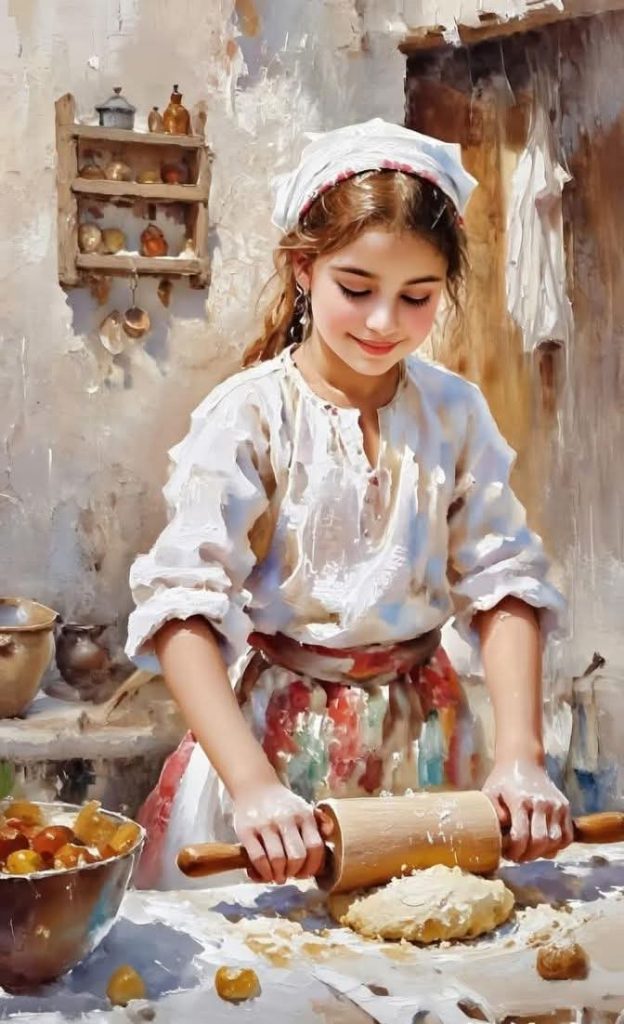
Now, every Friday evening, Mrs. Johnson’s house feels like it has a heartbeat again. The quiet ticking of the old wall clock is replaced by laughter that bounces off the walls, the clatter of spoons in bowls, and the soft hum of voices telling stories. Neighbors drift in carrying small offerings — a basket of fruit, a plate of cookies, sometimes just their presence — and each one brings a different shade of life to the table.
It isn’t a formal gathering. There are no invitations, no schedules, no expectations. Some Fridays, only two or three people show up. Other weeks, a dozen crowd around, pulling chairs from every corner of the house. But however many come, Mrs. Johnson prepares with the same care, knowing that each seat she sets is a quiet promise: you belong here.
Her children, though far away, often ask her on the phone, “Mom, are you managing all right by yourself?” She always smiles before answering. Because the truth is, she isn’t by herself anymore. Her table has become a little anchor in the neighborhood, drawing in those who feel lonely, those who are too tired to cook, those who simply long for conversation at the end of a long week.
Mrs. Johnson has discovered something she never expected in her later years — that love can return in different shapes. Sometimes it doesn’t come from the family you raised, but from the strangers who become family through shared meals and gentle laughter.
So she no longer sets the table for two. She sets it for whoever might arrive that evening, trusting that her home has room for them. And each Friday, when she sees the empty plates slowly fill, and the silence replaced with joy, she feels her husband’s presence too — as though he is smiling quietly, proud that she chose connection over solitude.
Because what nourishes the soul isn’t only food, but the knowledge that someone was waiting, that someone saved you a place, and that at least once a week, you truly belong.
I have a friend named Tahura. Full name was Tahura Parvin. For as long as I can remember, she had been searching for love. She always believed that somewhere out there was someone who would make her whole, someone who could finally fill the emptiness she often felt inside.
But over time, she began to notice something. Attraction was not love-it could appear quickly and just as quickly fade away. Longing was not love either — it was only temporary. The rush of excitement, the nervous energy, even the sweetest promises — all of these, too, could change or break with time.
After many rises and falls in her life, one evening Tahura had a realization. Love was never outside of her. Love was not a thing to be given or taken, but a quiet field within her, always present. In that field lived joy and sorrow, hope and despair, beginnings and endings. Relationships might stay or dissolve, people might come and go — but the field itself never disappeared.
She understood then: no one had ever “given” her love. In truth, she had only touched her own vastness when she was with another, and then she had mistakenly credited them for it. And when she thought love was gone, it hadn’t actually left — she had simply forgotten the field within. Love, she saw, was like the ocean, unchanged beneath the rise and fall of waves.
Today, Tahura no longer searches for love outside herself. She has learned to live as the light. Instead of clinging to another’s affection, she finds joy in giving love freely. Her greatest discovery has been this: what she longed for all along was already inside her.
With a gentle smile she often says, “The search begins and ends in the same place — in presence. I realized that I am love itself, and once I knew that, everything changed.
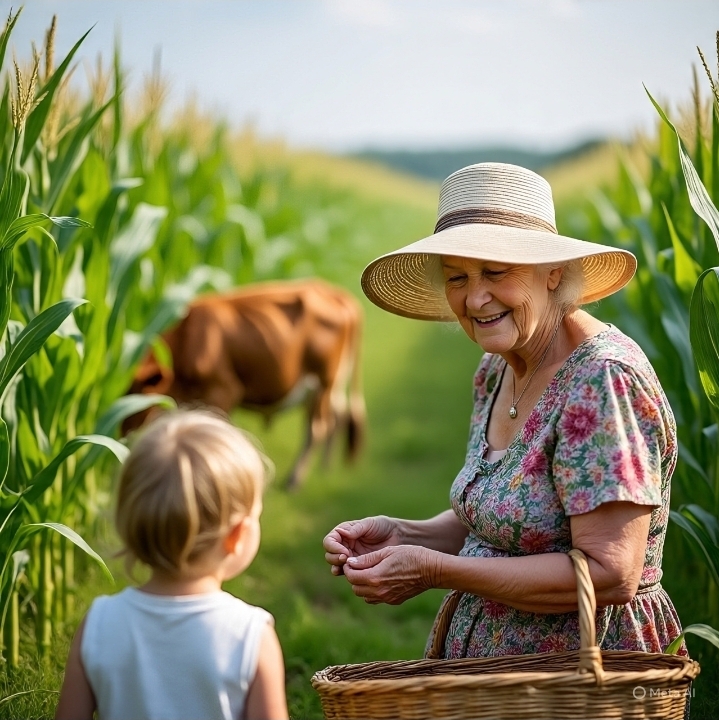
I had just returned to my hotel room in Dayton, Ohio, after a long day of official work. I stopped in the lobby for a quick coffee, and a woman sat down in the chair next to me. What started as casual small talk about travel and family soon turned warm and friendly. Her husband and children were at the pool, and while they swam, she began telling me about her grandmother’s farm back in Dayton.
“Grandma had acres of cornfields that stretched toward the horizon,” she said, her voice soft and nostalgic. “Cattle grazed in the pastures, and the family supplied milk to the local store and meat to the community. It was hard work, but steady, honest, and full of care.”
As she spoke, I could almost see it: the green stalks swaying in the Ohio breeze, the lowing of cows at dusk, the smell of fresh hay in the barn. She smiled as she remembered riding the tractor with her grandmother, listening to her say, “Life is like the harvest. You plant, you wait, you tend — and when the season is right, it gives back.”
I listened quietly, feeling the weight of her memories. I had never known my own grandparents — my grandmother passed away when my father was just seven — so I had no fields, no barns, no hands to guide me through lessons of patience and care. Yet as I sat there, absorbing hers, it felt as if I were touching a fragment of the love and wisdom I had missed.
She looked at me with a gentle smile. “Every time I see a cornfield,” she said, “I think of her. She didn’t just raise crops and cattle — she raised us, with patience and care.”
In that hotel lobby, with the faint laughter of her children drifting in from the pool, I realized the quiet power of stories. Even when they aren’t our own, they bridge absence, loss, and distance, carrying lessons of patience, love, and life across generations.
-ChoitalykRuman #ummeymiah
2025 ChoitalykRuman (Ummey R Miah). All rights reserved.