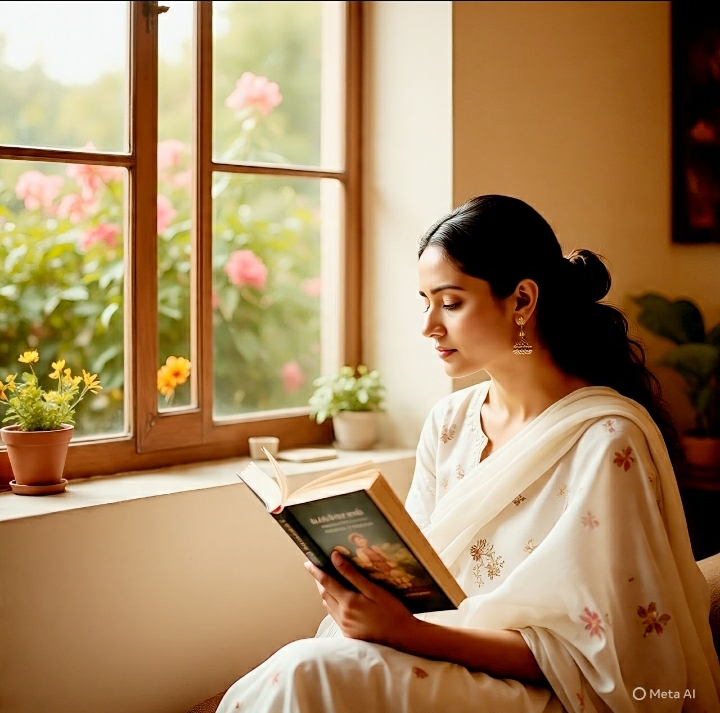
Somewhere along the road of growing older, I’ve started asking a different kind of question—not about achieving more or standing out, but about what it means to simply be.
There was a time when I equated meaning with success. With visibility. With being someone others recognized or admired. But these days, in the soft hush of early mornings or the long pause before sleep, I ask myself something else entirely:
Can a life be deeply meaningful even if it’s not exceptional by the world’s standards?
This question doesn’t come from sadness. It comes from curiosity. It’s the kind of question that stirs quietly in the soul—not loud or dramatic, just honest.
I no longer chase urgency. Some mornings, there’s no plan at all. No project waiting. No title to uphold. So, I sit. I breathe. I listen. Not to the world clamoring outside, but to the subtle rhythm within: the slow rise of breath, the quiet heartbeat, the pulse of simply existing.
I think often of the words of Alan Watts, who once wrote: “The meaning of life is just to be alive. It is so plain and so obvious and so simple. And yet, everybody rushes around in a great panic as if it were necessary to achieve something beyond themselves.”
That line lands differently the older I get. It’s not a call to do less. It’s an invitation to see more—to notice the sacredness hidden in the ordinary, the beauty of just being here.
I’ve lived a life of genuine effort. I’ve been a filmmaker, a teacher, a musician, a nonprofit worker. My days were full of purpose, but they didn’t come with headlines or honors. Still, something inside kept whispering, “It’s not enough. You could’ve done more.”
That whisper wasn’t mine alone. It was inherited—from a culture that prizes greatness over goodness, performance over presence, visibility over sincerity.
Even in my younger years, I remember wanting to be seen. Not for fame, but for validation. I had dreams, questions, a yearning for connection—but rarely felt invited to share them. I wasn’t excluded, just overlooked. And so I learned to measure value by recognition. If no one asked, maybe it didn’t matter. If I wasn’t extraordinary, maybe I wasn’t enough.
These quiet injuries shape us. They drive us to overextend, to seek affirmation outside ourselves, to confuse being noticed with being worthy.
But now I understand—I was never failing. I was simply living a different kind of life. A sincere life. A quiet, faithful walk through the world that doesn’t always show up on resumes or in applause.
And that realization shifted everything.
Because this isn’t only about personal healing—it’s about cultural remembering.
In many parts of modern life, especially in the West, aging is treated like a slow vanishing. Youth is glamorized. Speed is celebrated. Noise is rewarded. We speak of honoring elders, but too often we forget to listen to them. The wisdom of lived experience is brushed aside for the flash of the new.
But not every culture has forgotten.
In many Indigenous communities, elders are the memory-keepers. The ones who hold the stories, the rhythms, the guidance passed down through seasons of being. The Stoics believed that wisdom—not fame—was the highest virtue. In ancient tribes and forgotten villages, older voices still guide the path forward, not because they shout, but because they’ve learned to listen first.
What kind of culture forgets the value of its elders? What kind of system discards a deeply lived life simply because it doesn’t perform anymore?
I don’t want to answer that question with frustration. I want to live the alternative. If the world forgets to see aging as deepening, then I will choose to see it that way—for myself and for others.
In recent years, I’ve found comfort in Buddhist teachings. Not as dogma, but as a gentle rhythm. The Four Noble Truths helped me name a suffering I never quite understood: the craving to be other than I am. That craving once wore the mask of ambition, perfection, and productivity. But I now see it for what it was: a distraction from presence.
The invitation of the Buddhist path isn’t to achieve. It’s to return. Return to presence. To enoughness. To the gentle breath of now.
Letting go of the need to be exceptional doesn’t mean giving up. It means softening into what’s real. It means asking: What happens if I live this moment fully, even if no one applauds?
Carl Jung once said that his prescription for most patients was simple: walk every day and write things down. I’ve taken that to heart. Writing has become my way of listening inward. I don’t write for fame. I write to find clarity. To feel the quiet pulse of truth beneath my experiences. Even if no one reads the words, they’ve already done their work in me.
I no longer wait for someone to offer me a platform. I’ve stopped hoping to be chosen. Instead, I live as if what I carry matters—because it does.
Even now, doubts visit me. Did I make enough of this life? Did I leave a mark? But I’ve learned not to fear those questions. I welcome them like old friends. And I respond, softly:
Yes. It matters. Because I lived it with heart. Because I stayed true to what called me. Because I kept showing up—even when no one was looking.
That, to me, is enough.
Perhaps we were never meant to be exceptional. Perhaps we were meant to be present. To live with care. To offer kindness. To pass along something quieter than legacy but more enduring than fame: presence, attention, love.
In a world that constantly urges us to speak up, there’s something quietly transformative about the words we choose not to send. Unsent letters — those deeply personal messages we write but never mail — hold a quiet, almost sacred power. Though they may never reach their intended recipients, their impact on the writer can be profound. They offer a safe space for emotional release, clarity, and healing, all without the fear of judgment or consequence.
A Safe Space for Emotional Release
We often carry emotions that feel too intense, too complicated, or too vulnerable to share openly — grief, anger, longing, or even love. Putting these feelings into words, even if they’re never shared, can be incredibly cathartic. Writing a letter you never plan to send creates a space where raw emotion is allowed to exist without filters. It’s not about perfect grammar or polished prose; it’s about truth. And in truth, there is often relief.
Gaining Clarity Through Writing
When emotions swirl inside us, they can be difficult to untangle. Writing forces us to slow down and organize our thoughts. As we try to articulate how we feel, we begin to see patterns, motives, and hidden layers we hadn’t recognized before. This self-reflective process can deepen self-awareness and help us understand what we truly need or believe.
Creating Closure Without Contact
Many of us live with unresolved conversations — words we never got to say, apologies never heard, goodbyes that came too soon. An unsent letter offers a way to finish those conversations. By expressing what was left unspoken, we can release emotional weight and move toward closure. It’s not about rewriting the past, but about freeing ourselves from its emotional grip.
Resolving Internal Conflicts
Sometimes the conflict isn’t just with another person — it’s within ourselves. Writing a letter to someone we’ve struggled with can help us explore different perspectives, imagine what we might say if fear weren’t in the way, or even rehearse how to approach a difficult conversation. Even if the letter stays in a drawer forever, the act of writing it can bring internal peace.
A Path to Forgiveness
Forgiveness often feels impossible when we’re waiting on someone else to make amends. Unsent letters flip that narrative. They allow us to express forgiveness — or even ask for it — on our own terms, without needing anything in return. In this way, they become a powerful tool for healing wounds that no longer serve us.
Deepening Real-World Relationships
Interestingly, writing letters we never send can improve how we interact with others. The process of clarifying our thoughts and emotions helps us show up more grounded and empathetic in real conversations. We may find ourselves better able to express our needs, set boundaries, or extend compassion — not just toward others, but toward ourselves.
A Channel for Creative Exploration
Beyond emotional processing, unsent letters can also be a canvas for creativity. There are no rules here — write as a poet, a dreamer, or someone you’ve never dared to be aloud. This form of expression can unlock new creative voices and remind us that not all writing needs an audience to have value.
The Quiet Strength of Saying the Unsaid
The beauty of unsent letters is that they don’t require closure from the outside world. They don’t need approval, acknowledgment, or response. They simply are — honest, private reflections of our inner world.
In the act of writing, we give shape to the invisible. We create a mirror for the soul. And whether they’re burned, buried, or tucked away in a journal, unsent letters offer one simple truth: sometimes, healing begins not in what we say to others, but in what we dare to say to ourselves.