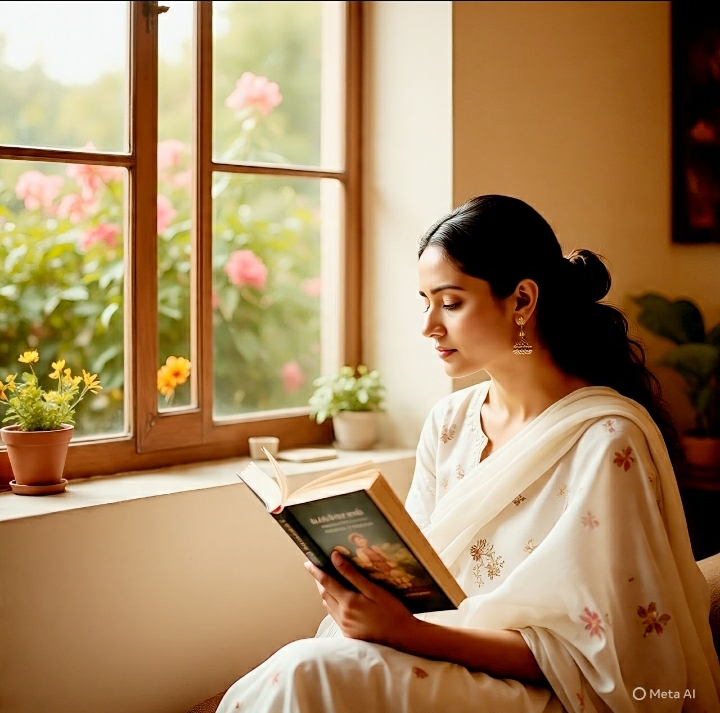
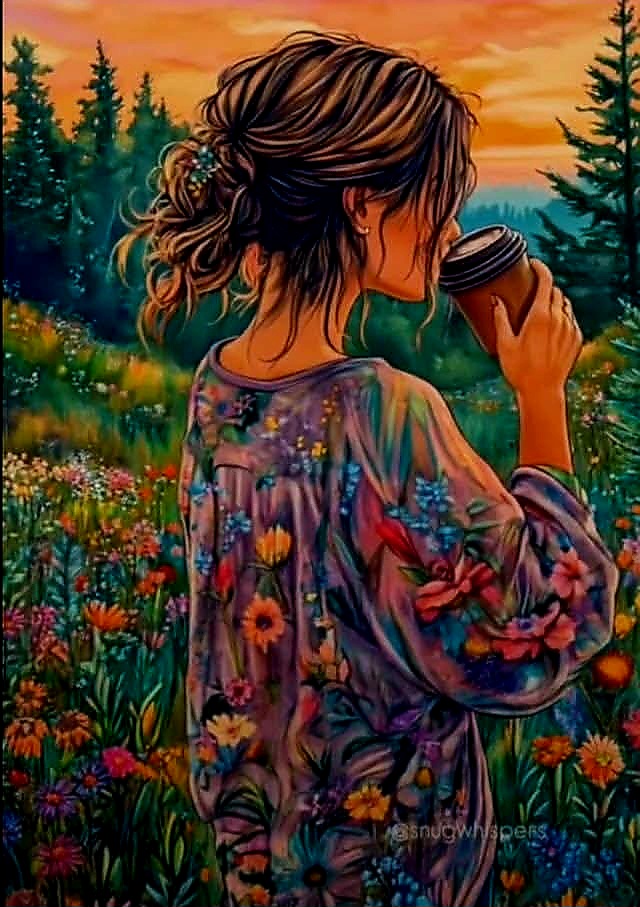
I have a friend named Tahura. Full name was Tahura Parvin. For as long as I can remember, she had been searching for love. She always believed that somewhere out there was someone who would make her whole, someone who could finally fill the emptiness she often felt inside.
But over time, she began to notice something. Attraction was not love-it could appear quickly and just as quickly fade away. Longing was not love either — it was only temporary. The rush of excitement, the nervous energy, even the sweetest promises — all of these, too, could change or break with time.
After many rises and falls in her life, one evening Tahura had a realization. Love was never outside of her. Love was not a thing to be given or taken, but a quiet field within her, always present. In that field lived joy and sorrow, hope and despair, beginnings and endings. Relationships might stay or dissolve, people might come and go — but the field itself never disappeared.
She understood then: no one had ever “given” her love. In truth, she had only touched her own vastness when she was with another, and then she had mistakenly credited them for it. And when she thought love was gone, it hadn’t actually left — she had simply forgotten the field within. Love, she saw, was like the ocean, unchanged beneath the rise and fall of waves.
Today, Tahura no longer searches for love outside herself. She has learned to live as the light. Instead of clinging to another’s affection, she finds joy in giving love freely. Her greatest discovery has been this: what she longed for all along was already inside her.
With a gentle smile she often says, “The search begins and ends in the same place — in presence. I realized that I am love itself, and once I knew that, everything changed.
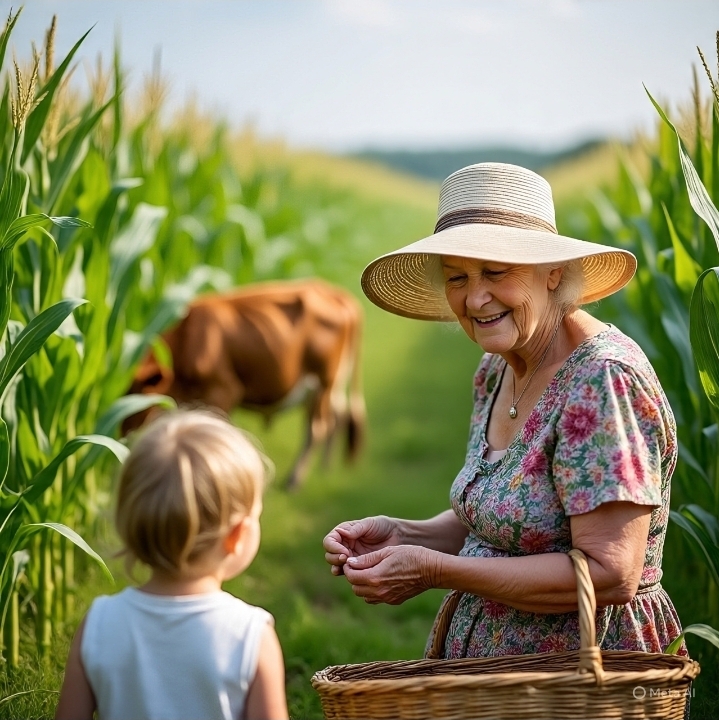
I had just returned to my hotel room in Dayton, Ohio, after a long day of official work. I stopped in the lobby for a quick coffee, and a woman sat down in the chair next to me. What started as casual small talk about travel and family soon turned warm and friendly. Her husband and children were at the pool, and while they swam, she began telling me about her grandmother’s farm back in Dayton.
“Grandma had acres of cornfields that stretched toward the horizon,” she said, her voice soft and nostalgic. “Cattle grazed in the pastures, and the family supplied milk to the local store and meat to the community. It was hard work, but steady, honest, and full of care.”
As she spoke, I could almost see it: the green stalks swaying in the Ohio breeze, the lowing of cows at dusk, the smell of fresh hay in the barn. She smiled as she remembered riding the tractor with her grandmother, listening to her say, “Life is like the harvest. You plant, you wait, you tend — and when the season is right, it gives back.”
I listened quietly, feeling the weight of her memories. I had never known my own grandparents — my grandmother passed away when my father was just seven — so I had no fields, no barns, no hands to guide me through lessons of patience and care. Yet as I sat there, absorbing hers, it felt as if I were touching a fragment of the love and wisdom I had missed.
She looked at me with a gentle smile. “Every time I see a cornfield,” she said, “I think of her. She didn’t just raise crops and cattle — she raised us, with patience and care.”
In that hotel lobby, with the faint laughter of her children drifting in from the pool, I realized the quiet power of stories. Even when they aren’t our own, they bridge absence, loss, and distance, carrying lessons of patience, love, and life across generations.
-ChoitalykRuman #ummeymiah
2025 ChoitalykRuman (Ummey R Miah). All rights reserved.
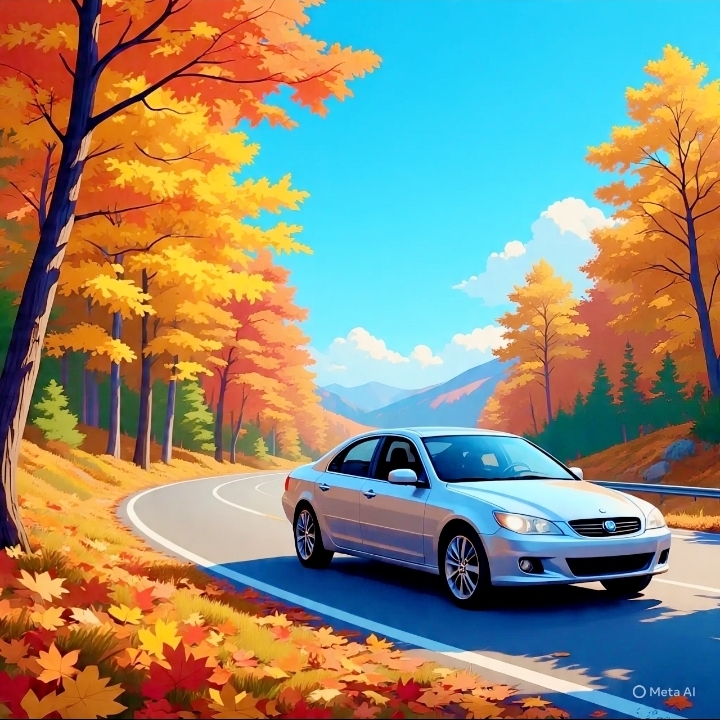
It’s a beautiful Saturday morning. The sun spills across the earth in golden rays, and autumn leaves glow like fire-tipped candles dancing in the breeze. The crisp air clears my thoughts, and I feel my body, mind, and soul awaken in harmony. Driving slowly, I gather the beauty around me as inspiration. Then, as if touched by the wind, my mind drifts back to the stages of life—each one like a season, each one with its own light.
Childhood – The Spring ? Childhood is the spring of life—fresh, green, and bursting with promise. Days feel endless, stretching like wide meadows filled with laughter and play. We chase butterflies, build castles out of sand, and dream under the sky, believing the world is nothing but magic. Just as spring awakens the earth, childhood awakens the heart with wonder and curiosity.
Young Adulthood – The Summer 😕 Young adulthood is summer—bright, bold, and alive with energy. The world feels wide open, like a sunlit horizon waiting to be explored. We dream fiercely, chase love, build homes, and carve paths with passion. Days run short because they are overflowing—with work, ambition, adventure, and joy. Just as summer asks the earth to grow strong and flourish, young adulthood asks us to be brave, to step into our power, and to shine.
Middle Age – The Autumn ? Middle age arrives like autumn, full of richness, yet touched with change. Our lives carry many colors—family, responsibilities, achievements, and lessons learned. We balance caring for children with guiding our parents, juggling dreams with duties. Time moves faster, like leaves falling in the breeze, reminding us that nothing stays forever. Yet autumn is not only about endings—it is about abundance. The lines on our faces are not losses but harvests, proof of all the love we’ve sown and the wisdom we’ve gathered. Autumn teaches balance and reflection.
Old Age – The Winter ?? Old age is winter—quiet, gentle, and filled with deep peace. The world slows down, and the noise fades. Houses grow quieter, yet hearts grow fuller, holding memories like treasures. We sit by windows or on porches, watching seasons turn, knowing we’ve walked through them all. Just as winter holds the earth in stillness, old age teaches us gratitude—thankfulness for love shared, for battles fought, for moments lived. Wrinkles become the poetry of time, and silence becomes a friend.
Childhood (Spring) gives us wonder. – Young adulthood (Summer) teaches courage. – Middle age (Autumn) shows balance. – Old age (Winter) reminds us to be grateful.
The beauty of life is that each season prepares us for the next.
And now, as I drive on this golden Saturday morning, surrounded by autumn’s glowing beauty, I realize how perfectly the seasons of nature mirror the seasons of life. The trees remind me that change is not loss—it is transformation. The golden leaves remind me that even endings can shine. And the sunlight pouring over the road reminds me that no matter the stage, life always offers light.
So wherever you are—whether in the bloom of spring, the fire of summer, the harvest of autumn, or the stillness of winter—walk gently. Carry an open heart. Leave behind love, kindness, and memories that will outlast the turning of every season.
Because just like this golden autumn day, every stage of life is a gift.
#ChoitalykRuman ##ummeymiah
2025 ChoitalykRuman (Ummey R Miah). All rights reserved.
That afternoon in Washington, D.C., the city was alive with both motion and stillness. Near the White House, the wide roads stretched like open arms, their edges softened by lines of tall trees. The air carried the scent of autumn leaves mixed with the hum of traffic. Tourists paused to take pictures, office workers hurried by with files in hand, and somewhere in the distance, a saxophone sang a tune that wrapped itself around the city’s rhythm.
I walked slowly, a little weary from the day, letting the breeze brush gently against my face. The buildings stood tall and proud, yet the whispering leaves reminded me that even in the midst of steel and stone, nature still found its voice.
By the time I reached Metro Center, my feet were heavy, and I longed for rest. As I descended into the station, I watched streams of people vanish into tunnels, each carrying stories of their own. I boarded the train toward Dunn Loring, leaned back against the seat, and let my thoughts wander. That’s when a memory returned—something a friend once shared with me about her mother, a wisdom passed down from her grandmother.
Her grandmother used to say: “Life is like a train, child. You don’t stop at every station, and not everyone rides with you until the end.”
When she was young, those words felt like just another one of her grandma’s sayings, the kind whispered while cooking or sewing. But as time moved on and her own hair began to gray, the meaning became clearer.
In youth, the train feels crowded, noisy, and fast. Friends, neighbors, classmates, family—all aboard together. The compartments are full of laughter, plans, and endless chatter, and it feels as if the ride will last forever.
But slowly, passengers begin to step off. Some leave because their path takes them elsewhere. Others are lost suddenly, leaving empty seats behind. With each stop, the train grows quieter.
And that is where her grandmother’s wisdom takes shape. The secret is not to mourn everyone who leaves but to cherish those who remain beside you. To look out the window and notice the changing view—sunrises and sunsets, fields and mountains, rivers and cities—because that scenery is part of the gift of the journey.
Her grandmother’s words still echo: “Don’t be afraid when the train empties out. Be grateful for the company you had, and when your stop comes, step off in peace, knowing you traveled well.”
Life, I realize, is exactly like that train—filled with comings and goings, meetings and farewells, noise and quiet. And in the end, the beauty is not in perfection, but in the simple truth that the journey was ours.
#ChoitalykRuman; #ummeymia
2025 ChoitalykRuman (Ummey R Miah). All rights reserved.
We live in a time where speed is celebrated, where convenience often replaces connection, and where self-preservation can sometimes take priority over compassion. The world is loud, busy, and, at times, unkind. And yet — there is still a quiet power in choosing to care.
Be the one who chooses love over indifference. Be the one who shows up, even when it’s inconvenient. Be the one who makes the effort to check in, to ask the questions that matter, and to truly listen to the answers.
There is something rare and extraordinary about a person who loves without hesitation — who allows themselves to feel without apologizing for the depth of their heart. In a world that teaches us to “play it cool” and hide our vulnerabilities, being open and real is an act of courage.
The Strength in Softness
It’s easy to mistake softness for weakness, but in truth, it is one of the strongest qualities a human being can possess. Remaining kind in the face of cruelty, keeping your heart open when life has tried to close it — that takes grit.
Believe in the gentleness that still exists, even if it feels hidden. Believe in the goodness of people, even when the news paints a darker picture. Believe in the beauty of being untethered, of moving through life with trust instead of fear.
Softness is not about being naive. It’s about being grounded in hope. It’s about refusing to let bitterness take root in your soul.
Choosing to Show Up
Showing up doesn’t always mean grand gestures. Sometimes it’s the simple things — answering the phone when a friend calls late at night, offering a smile to a stranger, sending a thoughtful message without expecting anything in return.
When you make someone feel seen, you give them a gift that stays with them far longer than you realize. When you show up, you remind others that they matter — and sometimes, that reminder can change the course of someone’s day… or even their life.
A World in Need of More Gentle-Hearted Souls
The truth is, the world doesn’t need more carelessness. It doesn’t need more disregard, more people hardened by cynicism. What it needs are those who choose to remain tender, who keep their compassion alive even after being hurt.
I will not trade the garden blooming in my heart for the weight of cold stones. The world may be harsh, yes, but that hardness only means it is in desperate need of those who dare to keep their hearts in full bloom — people willing to plant kindness in barren places, again and again.
In the end, caring is not a weakness. It is a quiet rebellion against the apathy that threatens to spread. So, be the one who loves. Be the one who listens. Be the one who shows up.
Because when we choose to keep our hearts blooming, even in the roughest of seasons, we become the very thing the world needs most.
Somewhere along the road of growing older, I’ve started asking a different kind of question—not about achieving more or standing out, but about what it means to simply be.
There was a time when I equated meaning with success. With visibility. With being someone others recognized or admired. But these days, in the soft hush of early mornings or the long pause before sleep, I ask myself something else entirely:
Can a life be deeply meaningful even if it’s not exceptional by the world’s standards?
This question doesn’t come from sadness. It comes from curiosity. It’s the kind of question that stirs quietly in the soul—not loud or dramatic, just honest.
I no longer chase urgency. Some mornings, there’s no plan at all. No project waiting. No title to uphold. So, I sit. I breathe. I listen. Not to the world clamoring outside, but to the subtle rhythm within: the slow rise of breath, the quiet heartbeat, the pulse of simply existing.
I think often of the words of Alan Watts, who once wrote: “The meaning of life is just to be alive. It is so plain and so obvious and so simple. And yet, everybody rushes around in a great panic as if it were necessary to achieve something beyond themselves.”
That line lands differently the older I get. It’s not a call to do less. It’s an invitation to see more—to notice the sacredness hidden in the ordinary, the beauty of just being here.
I’ve lived a life of genuine effort. I’ve been a filmmaker, a teacher, a musician, a nonprofit worker. My days were full of purpose, but they didn’t come with headlines or honors. Still, something inside kept whispering, “It’s not enough. You could’ve done more.”
That whisper wasn’t mine alone. It was inherited—from a culture that prizes greatness over goodness, performance over presence, visibility over sincerity.
Even in my younger years, I remember wanting to be seen. Not for fame, but for validation. I had dreams, questions, a yearning for connection—but rarely felt invited to share them. I wasn’t excluded, just overlooked. And so I learned to measure value by recognition. If no one asked, maybe it didn’t matter. If I wasn’t extraordinary, maybe I wasn’t enough.
These quiet injuries shape us. They drive us to overextend, to seek affirmation outside ourselves, to confuse being noticed with being worthy.
But now I understand—I was never failing. I was simply living a different kind of life. A sincere life. A quiet, faithful walk through the world that doesn’t always show up on resumes or in applause.
And that realization shifted everything.
Because this isn’t only about personal healing—it’s about cultural remembering.
In many parts of modern life, especially in the West, aging is treated like a slow vanishing. Youth is glamorized. Speed is celebrated. Noise is rewarded. We speak of honoring elders, but too often we forget to listen to them. The wisdom of lived experience is brushed aside for the flash of the new.
But not every culture has forgotten.
In many Indigenous communities, elders are the memory-keepers. The ones who hold the stories, the rhythms, the guidance passed down through seasons of being. The Stoics believed that wisdom—not fame—was the highest virtue. In ancient tribes and forgotten villages, older voices still guide the path forward, not because they shout, but because they’ve learned to listen first.
What kind of culture forgets the value of its elders? What kind of system discards a deeply lived life simply because it doesn’t perform anymore?
I don’t want to answer that question with frustration. I want to live the alternative. If the world forgets to see aging as deepening, then I will choose to see it that way—for myself and for others.
In recent years, I’ve found comfort in Buddhist teachings. Not as dogma, but as a gentle rhythm. The Four Noble Truths helped me name a suffering I never quite understood: the craving to be other than I am. That craving once wore the mask of ambition, perfection, and productivity. But I now see it for what it was: a distraction from presence.
The invitation of the Buddhist path isn’t to achieve. It’s to return. Return to presence. To enoughness. To the gentle breath of now.
Letting go of the need to be exceptional doesn’t mean giving up. It means softening into what’s real. It means asking: What happens if I live this moment fully, even if no one applauds?
Carl Jung once said that his prescription for most patients was simple: walk every day and write things down. I’ve taken that to heart. Writing has become my way of listening inward. I don’t write for fame. I write to find clarity. To feel the quiet pulse of truth beneath my experiences. Even if no one reads the words, they’ve already done their work in me.
I no longer wait for someone to offer me a platform. I’ve stopped hoping to be chosen. Instead, I live as if what I carry matters—because it does.
Even now, doubts visit me. Did I make enough of this life? Did I leave a mark? But I’ve learned not to fear those questions. I welcome them like old friends. And I respond, softly:
Yes. It matters. Because I lived it with heart. Because I stayed true to what called me. Because I kept showing up—even when no one was looking.
That, to me, is enough.
Perhaps we were never meant to be exceptional. Perhaps we were meant to be present. To live with care. To offer kindness. To pass along something quieter than legacy but more enduring than fame: presence, attention, love.