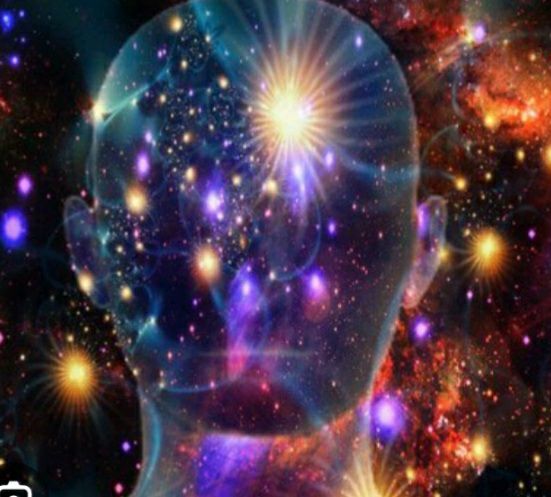
We often hear the term “Higher Mind,” but what does it truly mean? The Higher Mind is that deeper part of ourselves that embodies wisdom, self-awareness, and inner strength. It’s the guiding voice that helps us think beyond the present moment, making decisions that align with our core values, morals, and long-term goals. It’s the source of clarity that empowers us to live with purpose and intention.
This aspect of ourselves is deeply connected to the soul. Think of the Higher Mind as a bridge—a connection between the ego, or “lower mind,” and the spirit. While the ego helps us navigate the material world, the Higher Mind assists us in exploring realms beyond the physical.
The ego operates through a lens of limitation, seeing the world and others as separate from ourselves. It interprets life through our personal beliefs and perceived limitations. In contrast, the Higher Mind views reality through a lens of unity and infinite possibility.
When we look through the ego’s perspective, we often see the world and people as divided—unequal, separated by space and circumstances. But the Higher Mind sees things differently. It recognizes that everything is made up of energy, from physical objects to the air we breathe. What the ego perceives as empty space is actually energy, and this energy connects everything.
Even our thoughts are composed of energy, vibrating at different frequencies. The Higher Mind sees thoughts and physical objects as intertwined, both made from the same substance—energy, just vibrating at different rates. Every thought, every object has its own unique frequency, but they are all fundamentally part of the same energetic whole.
By tuning into the Higher Mind, we open ourselves to this broader perspective, moving beyond the ego’s limitations to experience the deeper connections that unite us with everything around us.
Examples of Ego vs. Higher Mind
Consider how we experience conflict with others. When operating from the ego, we often feel hurt, defensive, or angry. The ego views the disagreement as a personal attack, reinforcing the idea of separation between “me” and “them.” However, when we engage the Higher Mind, we see beyond the surface. We begin to understand the other person’s emotions, motivations, and perspectives, recognizing that we are all connected by a shared humanity. In this state, we approach conflict with compassion, seeking understanding instead of division.
Another example can be found in decision-making. The ego tends to focus on immediate, self-centered desires. Imagine someone is offered a promotion at work that comes with more money but also more stress and longer hours. The ego might jump at the chance because it values status and material gain. However, the Higher Mind might pause to consider the long-term effects on well-being and relationships, guiding the person to make a decision that aligns with their values and ultimate happiness, rather than short-term rewards.
In terms of creativity, the ego often stifles ideas with fear of judgment or failure. A person may have a strong desire to start a new project but stops themselves because the ego fears ridicule or rejection. The Higher Mind, however, sees creative expression as an unfolding of one’s true self and encourages the person to take action without worrying about external validation. It allows ideas to flow freely, trusting in the process rather than being attached to the outcome.
Finally, think about how we perceive success. From an ego-driven viewpoint, success is often tied to external achievements—money, recognition, or titles. But the Higher Mind understands that true success is internal. It’s about personal growth, fulfillment, and living in alignment with our deeper purpose. This shift in perspective allows us to find peace and contentment regardless of external circumstances, as we realize that success is a state of being rather than something to attain.
By learning to tap into the Higher Mind more frequently, we can navigate life with a sense of unity, purpose, and clarity, free from the limitations imposed by the ego. This shift in perception transforms how we interact with the world, leading to more meaningful and fulfilling experiences.
‘#ChoitalykRuman #ummeymiah